Cedar Lake Shoreline Gets Rip Rap, Boulders and River Rock Treatment
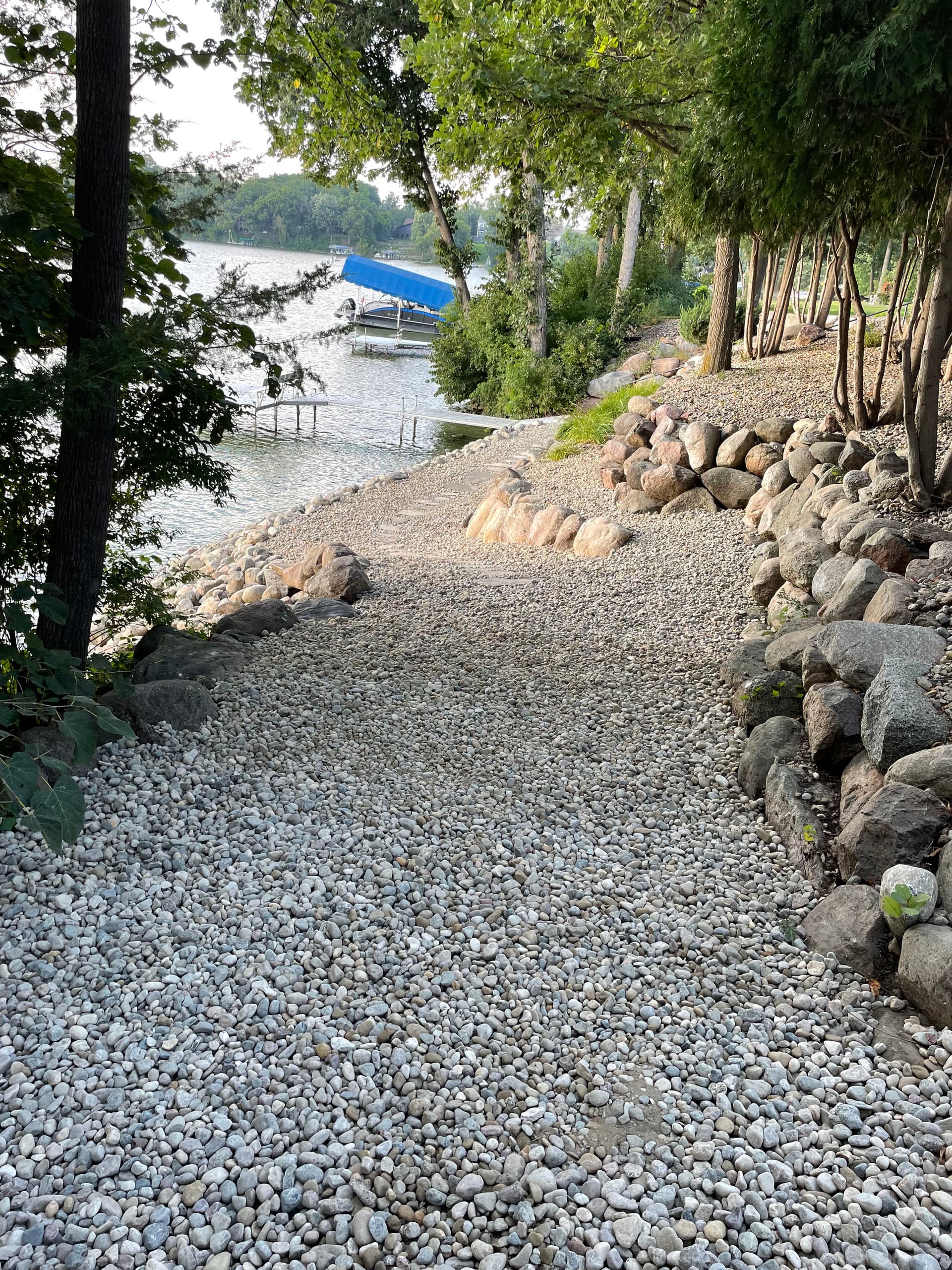
A weed-choked, eroding shoreline is one of those problems that sneaks up on you. What starts as a patch of overgrowth turns into soft, unstable ground that's hard to walk on and even harder to get a boat in and out of. That's exactly what this Cedar Lake homeowner was dealing with - and we knew the right fix wasn't a quick patch job.
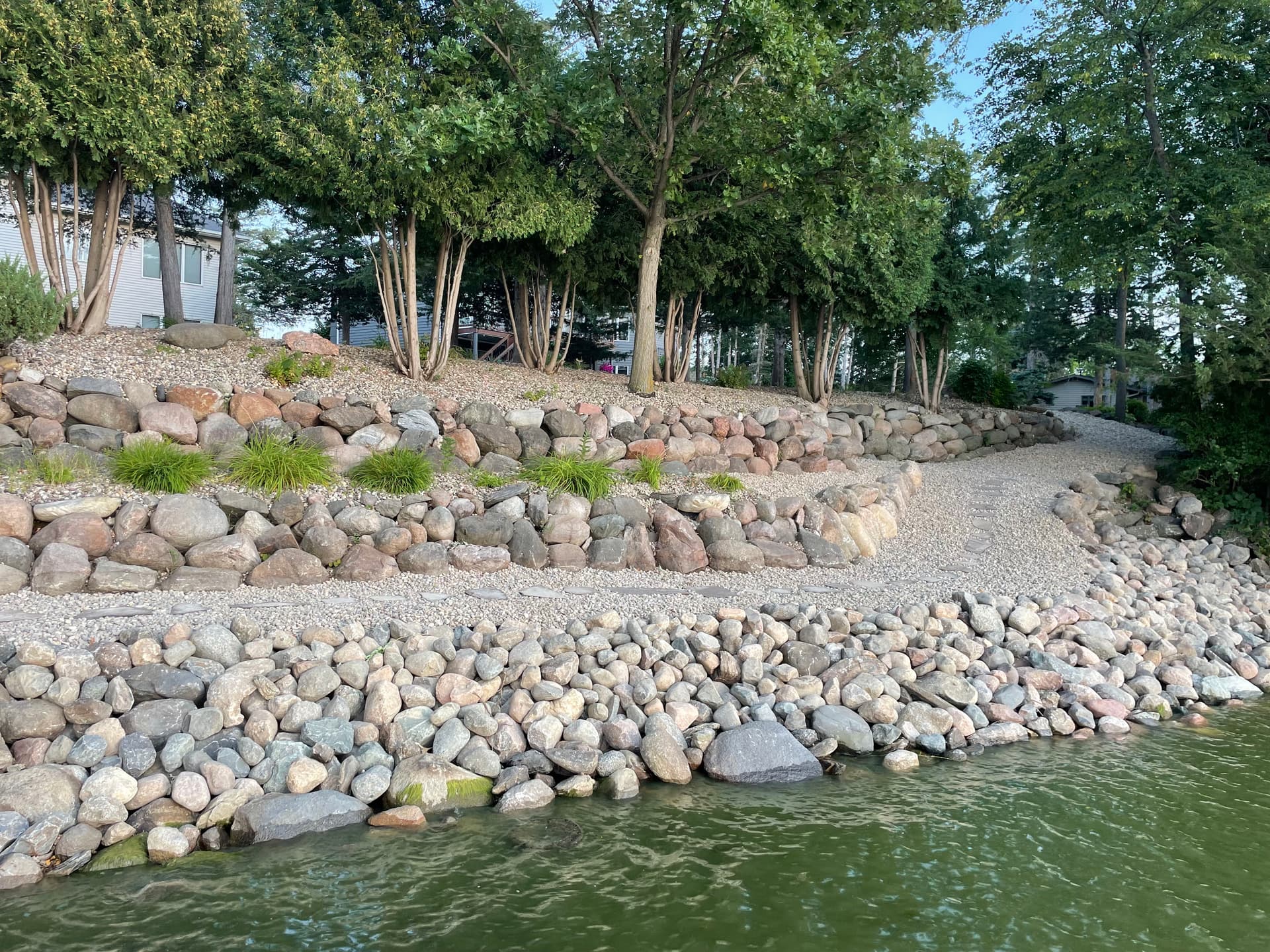
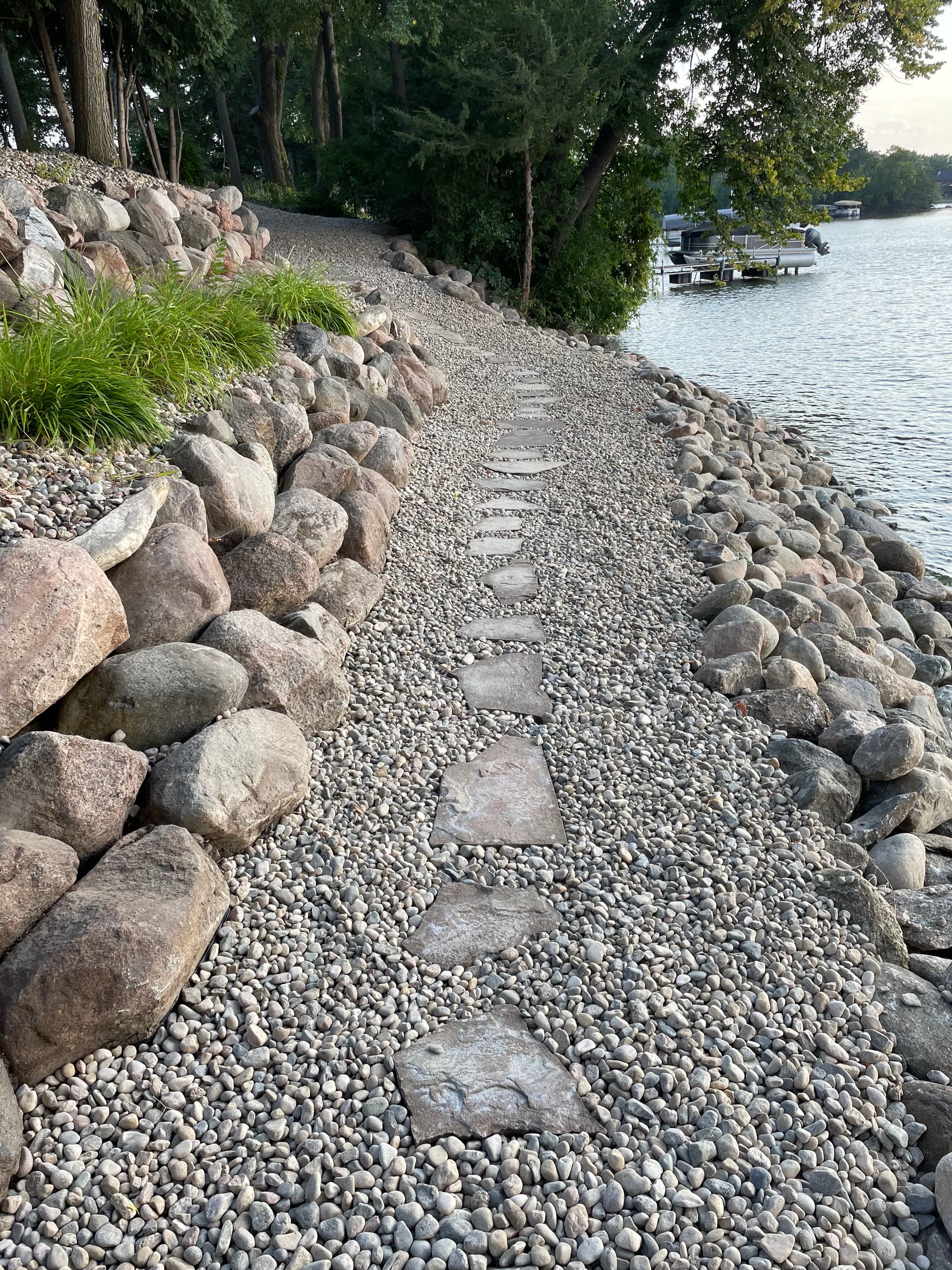
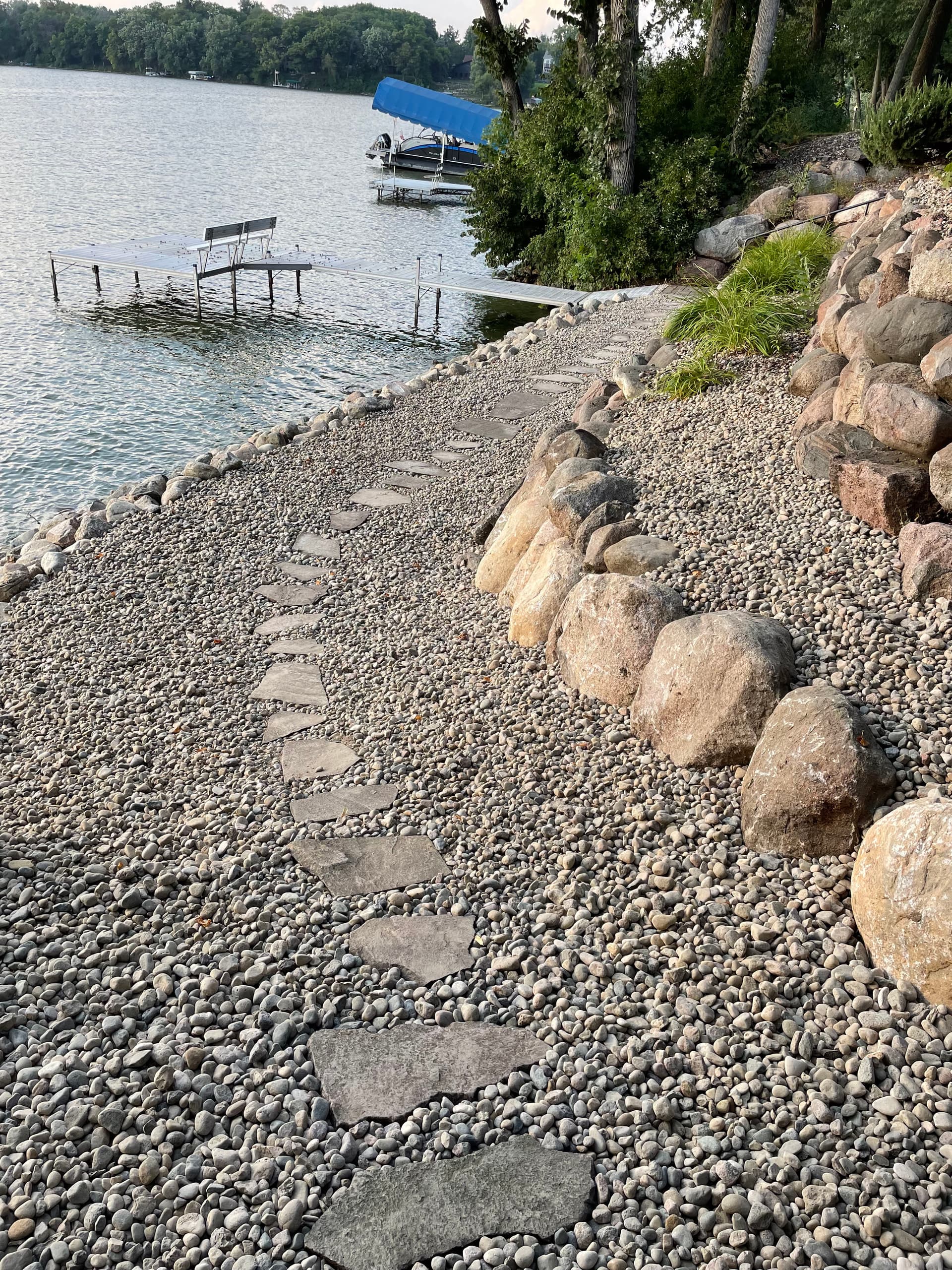
We went in with a full lakeshore restoration approach. Rip rap along the waterline to hold everything in place against wave action, larger boulders stacked to create clean terracing on the slope, and river rock filling it all in for a finished look that actually drains and stays put. The flagstone stepping path running down to the dock ties it all together - functional and sharp at the same time.
What we really focus on with jobs like this is the long game. Shorelines that get restored the right way don't need constant attention. No mowing steep slopes. No fighting weeds every season. No worrying about erosion eating away at your yard year after year. The rock does the work so the homeowner doesn't have to.
The terraced boulder walls also do something a lot of people don't think about upfront - they slow water down as it moves across the slope. That means less runoff, less erosion at the water's edge, and a shoreline that holds its shape through high water and heavy rain. It's smart design, not just good looks.
Every lakeshore is a little different, and that's why we don't use a cookie-cutter approach. The combination of materials here - rip rap, boulders, river rock, and flagstone - was chosen specifically for this site's slope, soil, and how the homeowner uses the water. That kind of site-specific thinking is what separates a shoreline that lasts from one that needs to be redone in a few years.