Crushed Trap Rock Lakeshore Access Path That Actually Holds Up
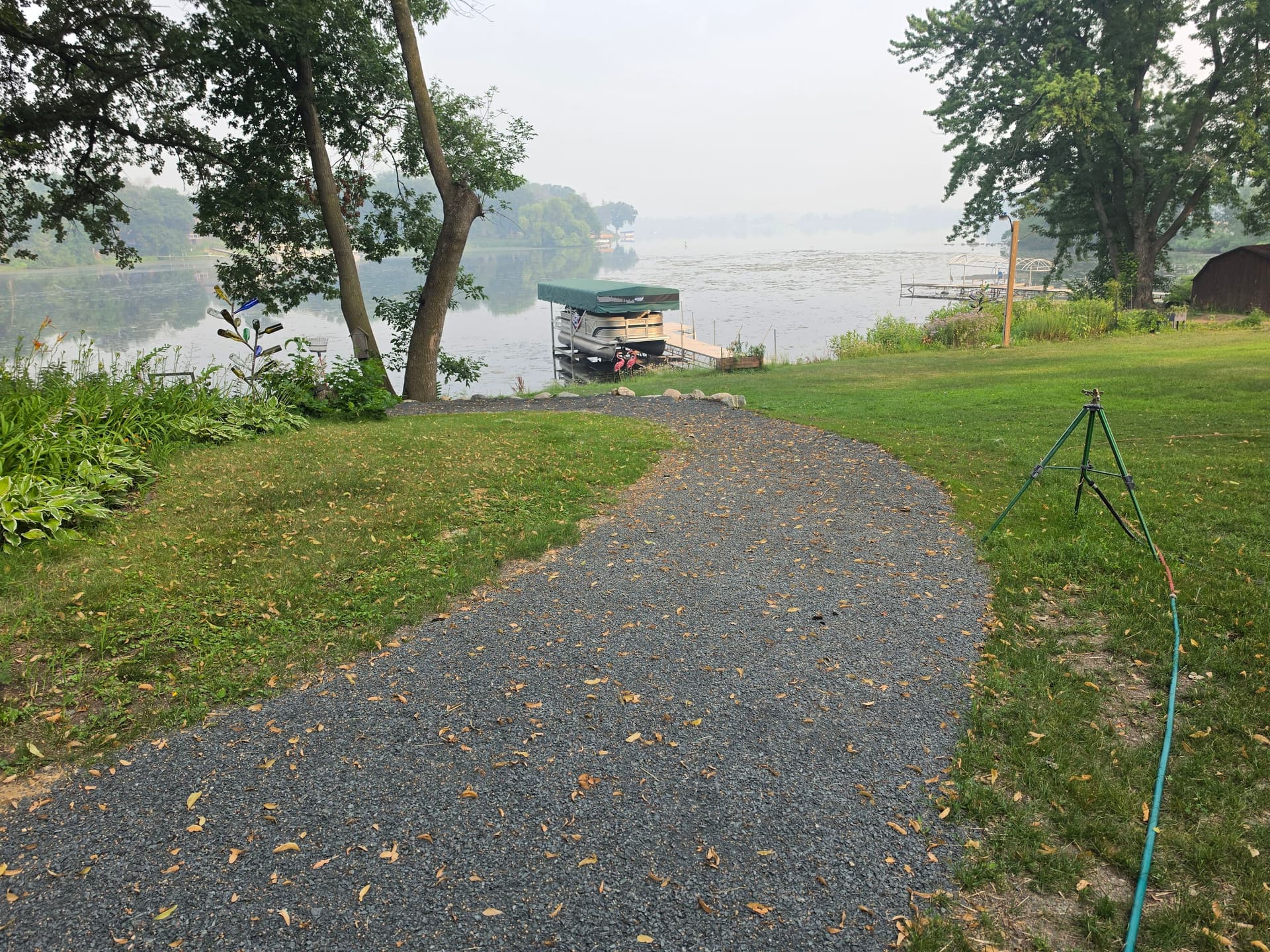
A lot of lake property owners assume that getting equipment down to the water requires a big concrete or asphalt job. It doesn't. Crushed trap rock is one of the most practical - and underused - solutions for lakeshore access, and this path is a good example of why.
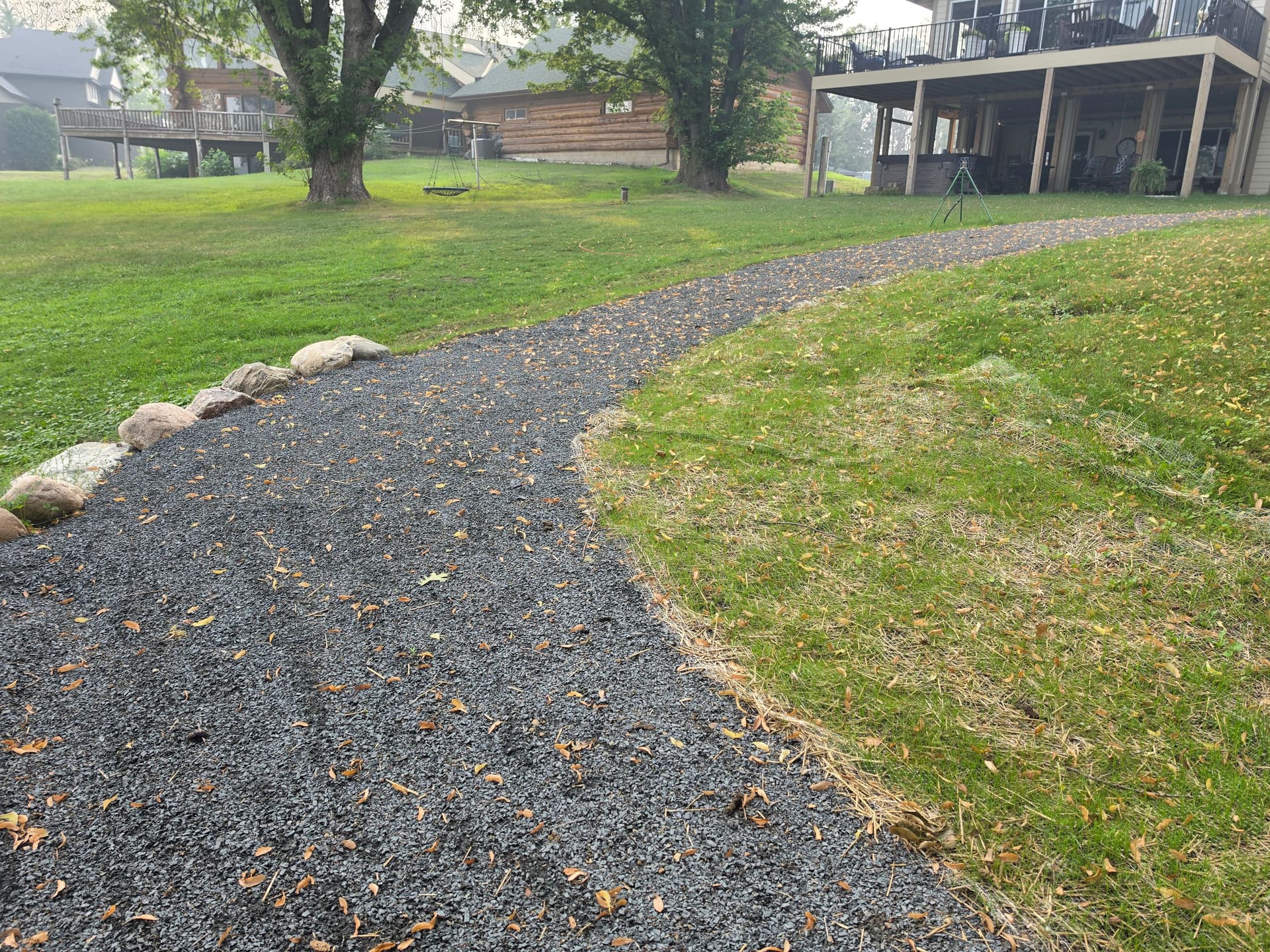
Here's what makes trap rock work so well for this kind of application. The angular edges of the crushed stone lock together when compacted, creating a firm, stable surface that doesn't shift or rut under regular equipment traffic. Four-wheelers, lawn tractors, utility carts - it handles all of it without breaking down the way softer gravel or bare soil would.
It's also low maintenance by nature. Once it's properly compacted and graded, you're not dealing with washouts, muddy ruts, or constant regrading after every rain. The path holds its shape season after season. And visually, the dark gray stone blends well with the natural setting - it doesn't look out of place on a lakeshore property the way paved surfaces can.
The boulders along the path edge aren't just decorative either. They help define the edge, keep mowing clean on both sides, and add a natural look that fits the landscape rather than fighting it. Small details like that are what separate a path that looks thrown together from one that actually looks like it belongs.
This is the kind of work we do as part of our lakeshore restoration approach - practical improvements that make the property more functional without overcomplicating things or breaking the bank. Sometimes the right solution is simpler than people expect.