Tearing Out a Failing Retaining Wall Before It Gets Worse
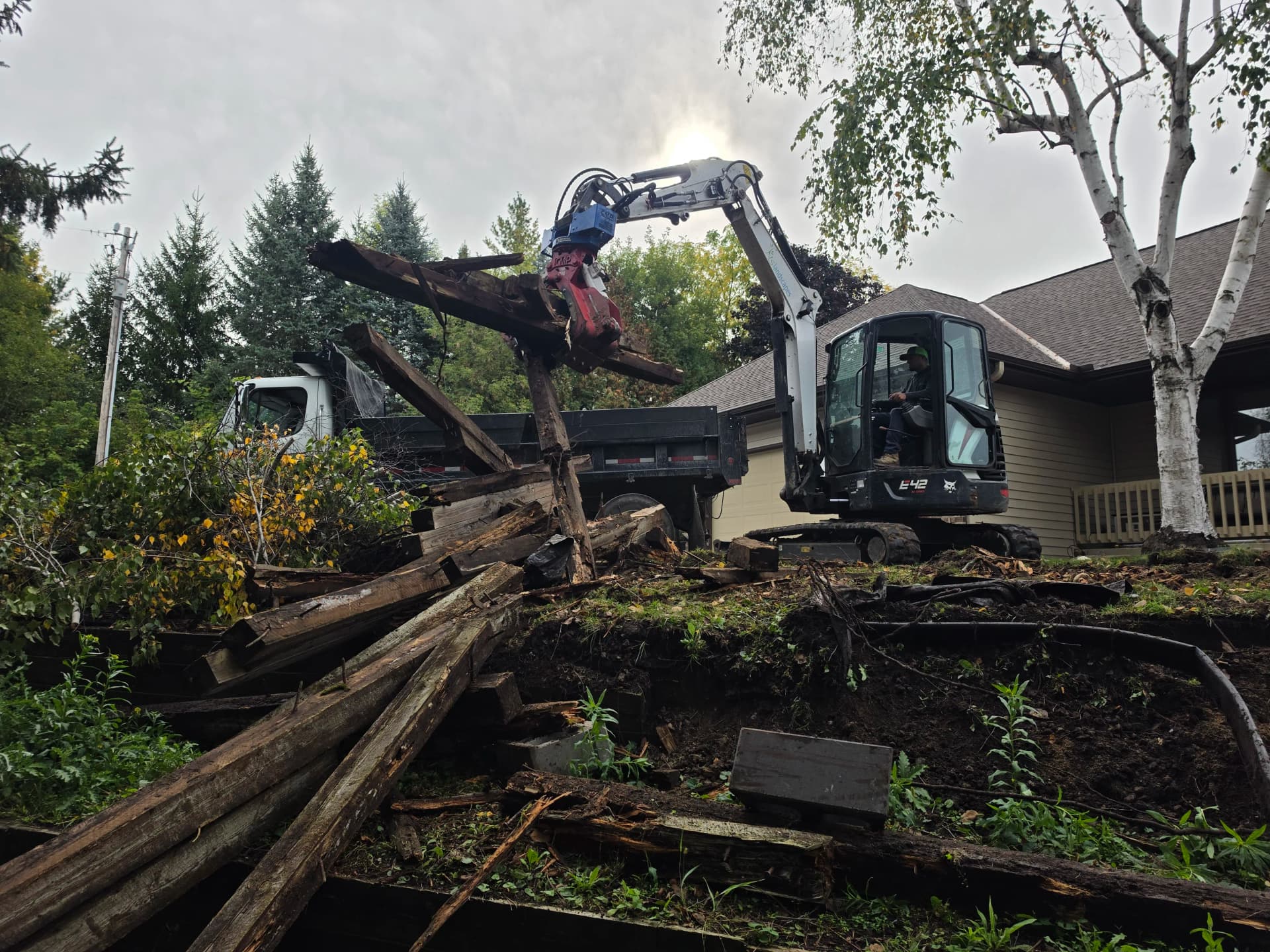
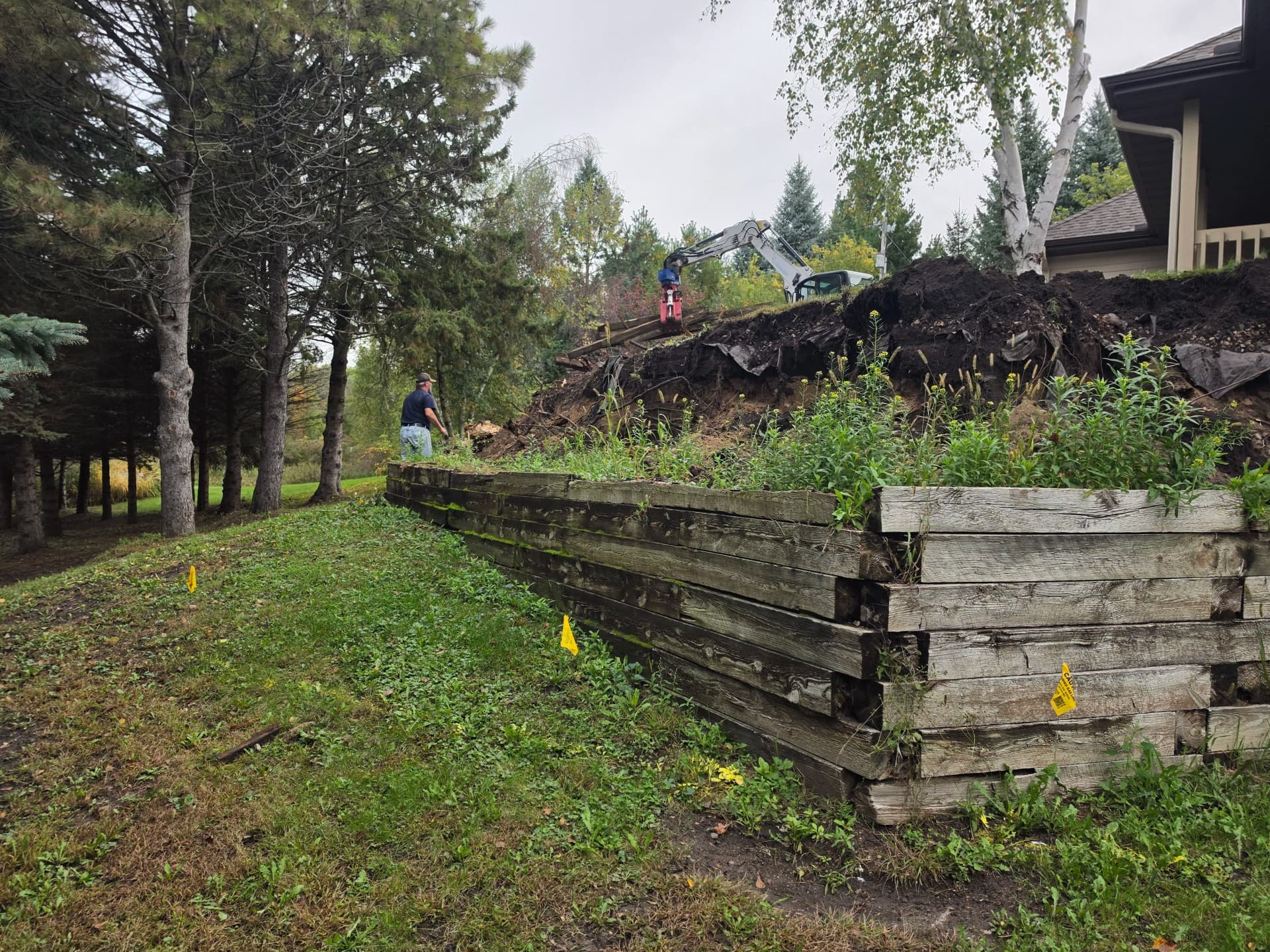
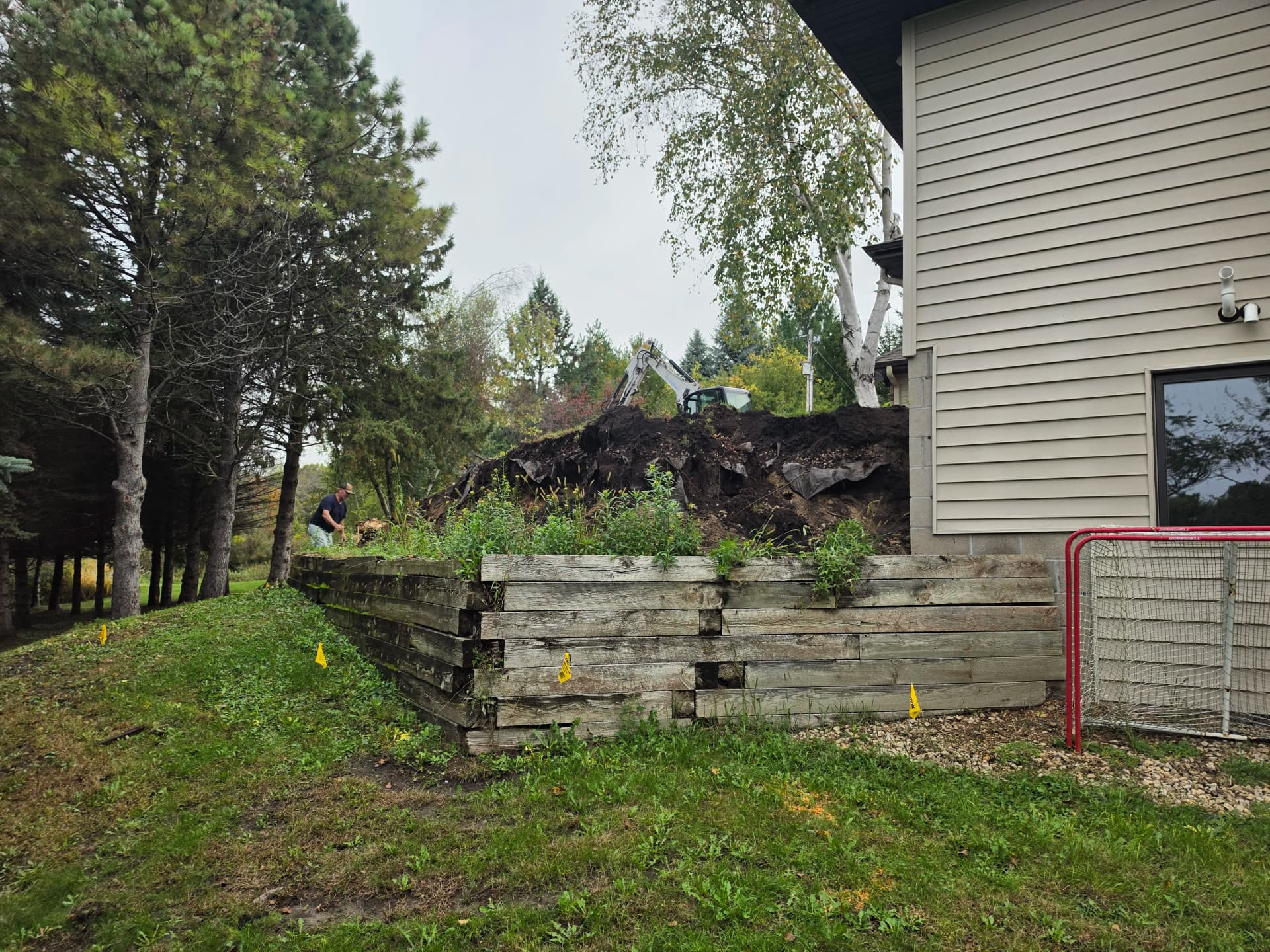
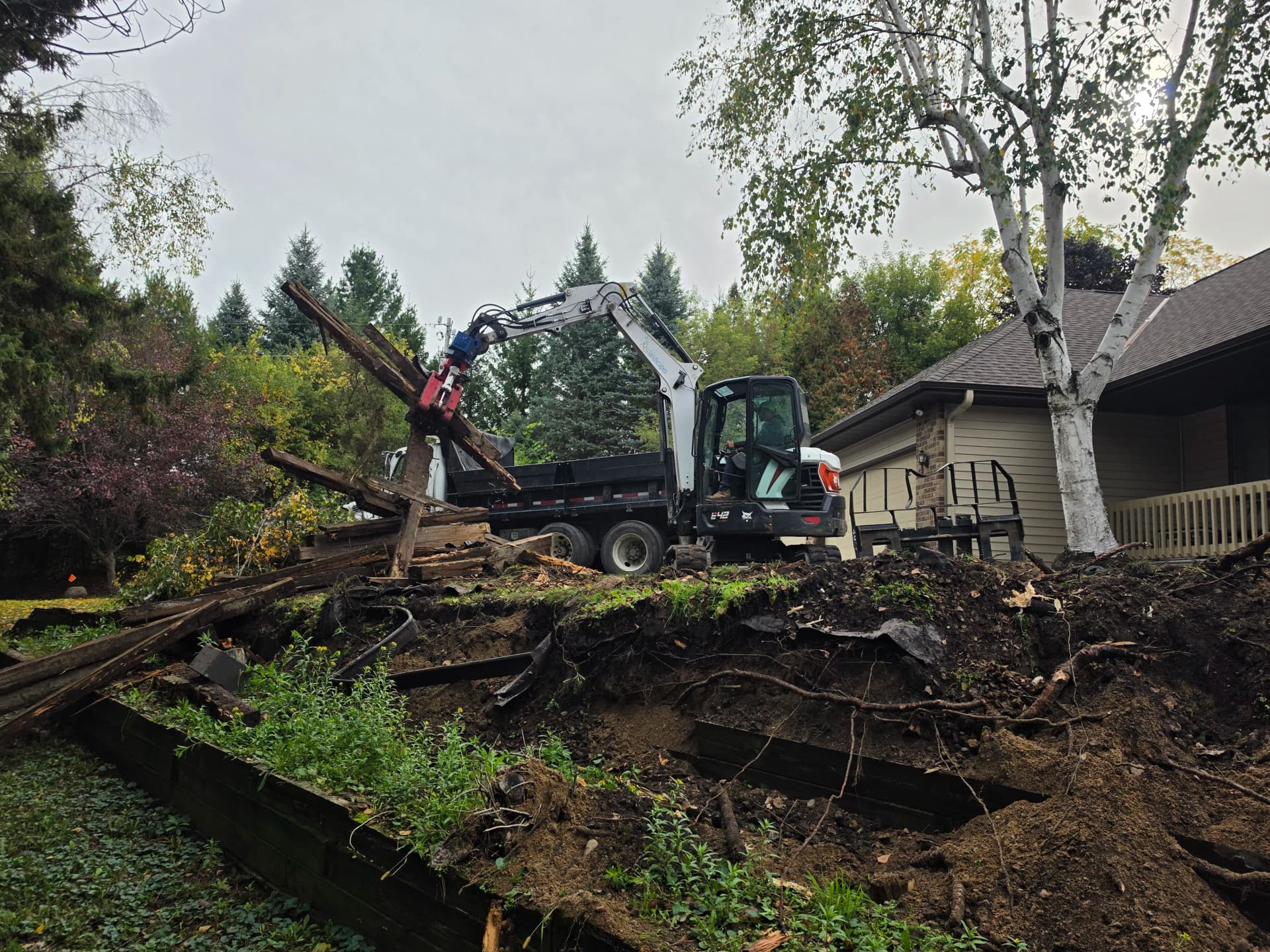
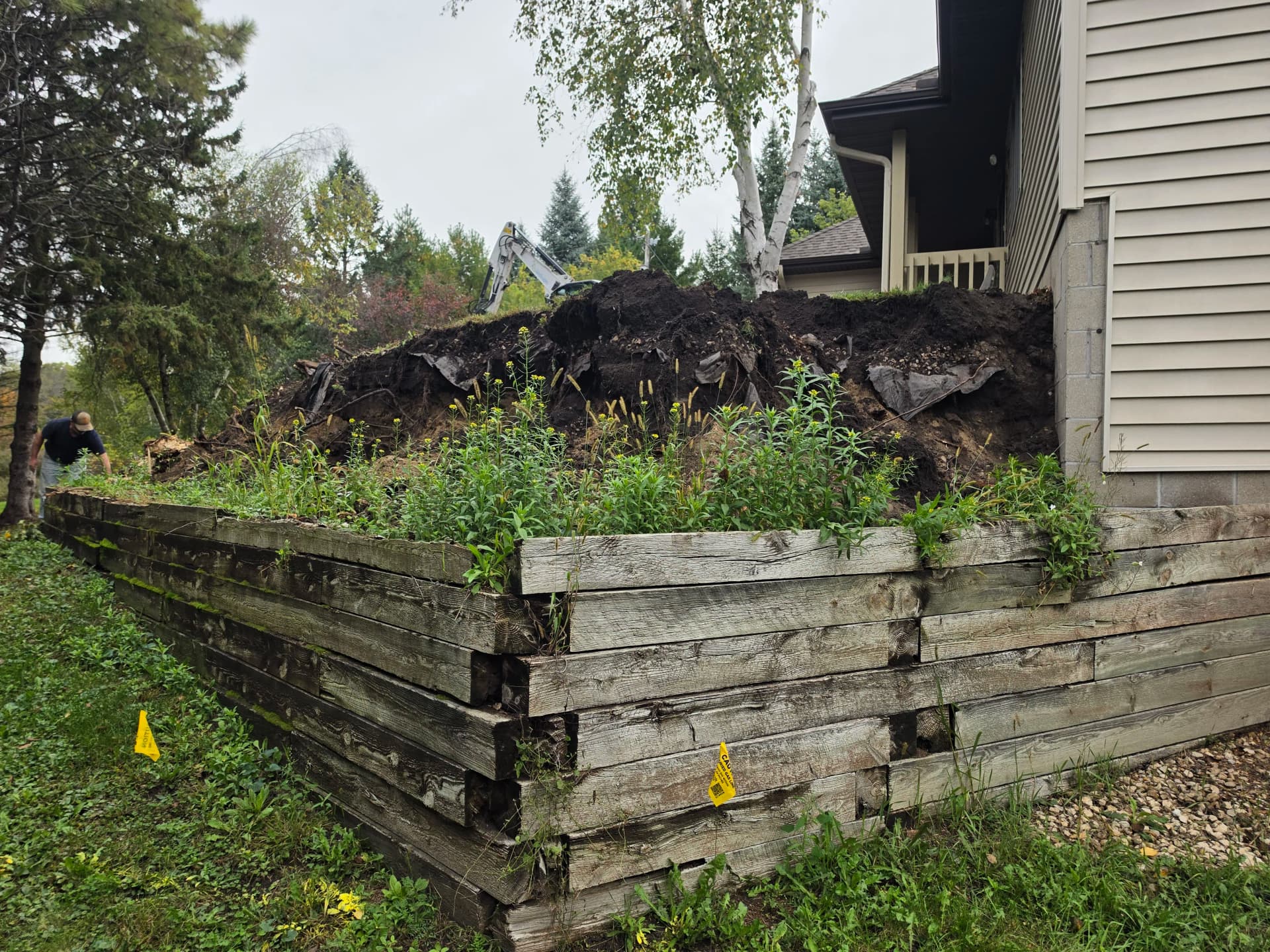
Old timber retaining walls have a lifespan. When that time is up, they don't just look bad - they start to move. The wood rots from the inside out, the soil behind it builds pressure, and eventually the whole thing starts to shift, bow, or collapse. At that point, it's not just a landscape problem anymore. It's a structural one.
That's exactly what we were dealing with here. The existing timber wall had clearly been in place for a long time, and it was done. Rotted timbers, soil pushing through, and a sloped section right next to the house that needed to be properly addressed before any rebuild could happen. Patching something like this doesn't make sense - you're just putting a band-aid on a problem that's getting worse underground every season.
So we pulled it all out. The Bobcat E42 mini excavator with a grapple attachment made short work of tearing out the old timber sections and loading them directly into the dump truck. It's the kind of equipment that lets us work efficiently on a residential property without tearing up the surrounding lawn and landscaping any more than necessary. Clean removal is step one - you can't build something solid on a bad foundation.
Once the old material is out and the slope is properly excavated, we can address drainage and backfill the right way before the new wall goes in. On a sloped property close to a home, that sub-surface work is what actually determines how long the new wall lasts. A wall is only as good as what's behind it.
If you've got a timber wall that's starting to lean, crack, or show signs of rot, now is the time to get it looked at. Waiting doesn't save money - it usually just means more excavation and more material to haul away later. Getting ahead of it is always the smarter move.